Stories from our work: what we found, what we changed, and what moved. Every number comes with a receipt that says where it came from, how it was counted, and when we checked it.
Prepared by Veer Singh, Founder · Figures checked September 2026
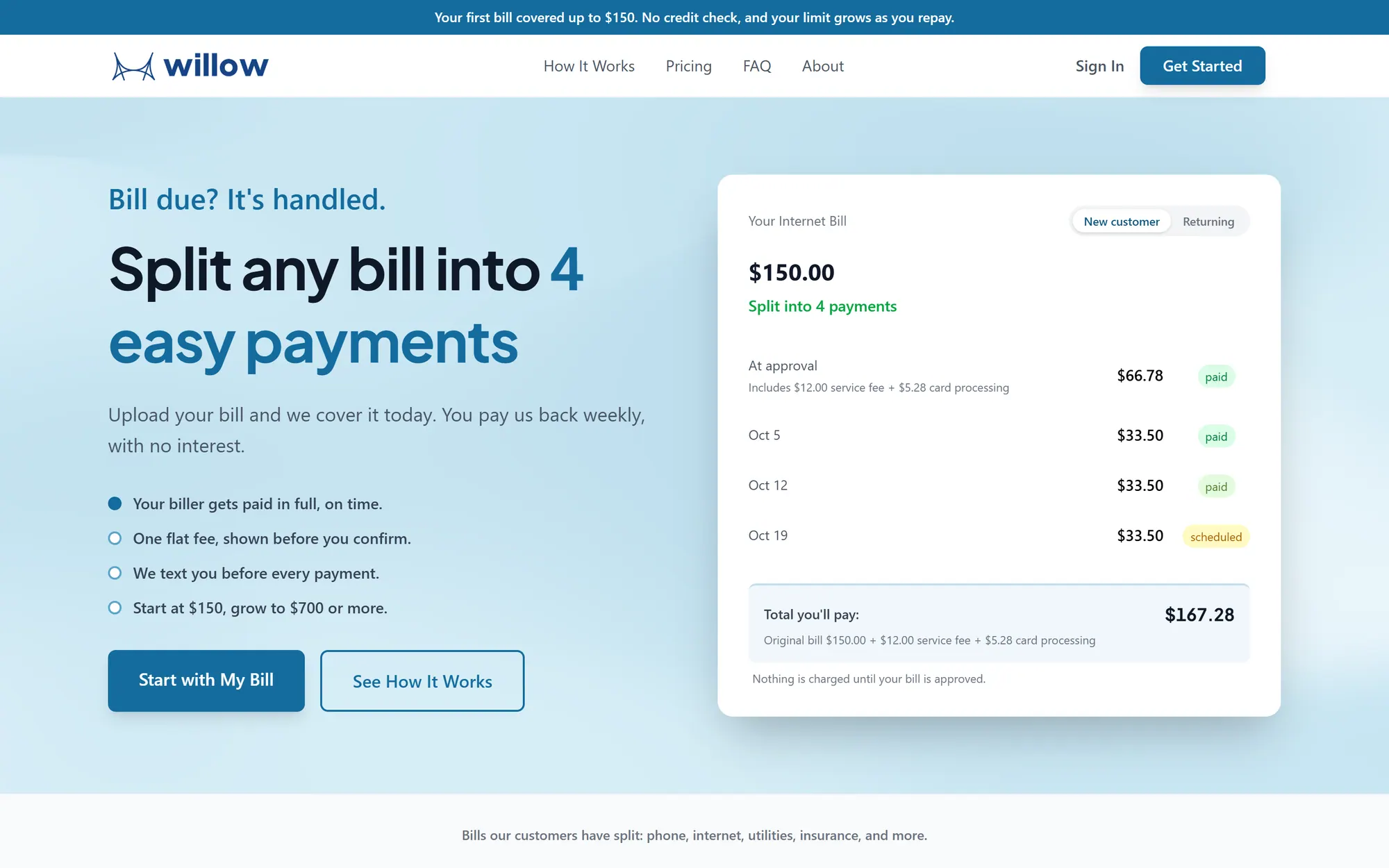
Willow pays household bills up front, and customers repay in installments. We run the growth side: paid search, offline conversions, attribution, and lifecycle email and SMS. We also engineer the platform underneath, so we can see the whole path from click to funded bill.
18,576
SMS delivered in 30 days, at a 91.1% delivery rate
Lifecycle and verification messaging for a consumer fintech, counted from the carrier, not estimated.
receipt
SOURCE · Twilio messaging records for a consumer-fintech client's production account
METHOD · Delivered-message count and delivery rate for a trailing 30-day window, verified independently against the Twilio API.
Google Ads reported conversions. The business runs on funded bills. The upload log said sales were flowing back to the ad account, but the ad account had recorded only a fraction of them, so every bidding decision learned from an incomplete picture.
What we did
Sent every funded sale back to Google Ads with its real fee value, and confirmed each batch landed.
Added a conversion signal that counts only new customers, so campaigns stop getting credit for people who already use Willow.
Rebuilt paid search campaign by campaign, with shared negative-keyword lists.
Built a channel view that counts funded bills by source: Google, affiliates, Bing, Meta, email and untagged traffic.
Traced the signup funnel step by step, split by paid and organic visitors.
Run lifecycle SMS and email, with delivery checked against the carrier’s own records.
What we found
A bid target was pushing brand clicks up in price. We corrected it.
At the worst signup step, paid and organic visitors dropped off at almost the same rate. The ads weren’t the leak; the site was.
Google gets credit for only part of the funded bills. We show the rest instead of letting one platform claim them all.
~33–40%
of funded bills are Google-attributed. We publish it on purpose.
receipt
SOURCE · Channel-attribution dashboard for a consumer-fintech client, reconciled against its funded-bill database
METHOD · Ad-platform conversions compared with funded bills in the system of record over rolling windows. Absent data never renders as zero; immature cohorts are labeled, not counted.
Client · name withheldAudit · Tracking · Landing pages
The leak, and the problem ads couldn’t fix.
A pet-food brand sells direct on Shopify, with Google and Meta campaigns run by another agency. We were brought in for an independent audit, a measurement rebuild, and landing pages for the paid traffic.
$1,094
a month of ad spend leaking, found in a line-by-line account audit
A Demand Gen campaign was buying orders at $206 CPA against a $35 target.
receipt
SOURCE · Google Ads account data for a DTC pet-food brand, delivered as a written audit
METHOD · Campaign-level cost against real purchase conversions over a 30-day window, as reported in the written account audit.
purchase rate: shoppers who clicked through from the landing pages vs the store-wide average
receipt
SOURCE · Store analytics, order data and landing-page server logs for a DTC pet-food brand
METHOD · Store sessions that entered from the landing pages, and their purchases, over a 30-day window, compared with the store-wide purchase rate for the same window. It counts shoppers who clicked through to the store, not every landing-page visit.
Fig. 02Bars drawn to scale from the receipted figure. No screenshots: this brand is named only with written permission.
Where they started
The spend was real. The numbers weren’t. Google counted video views as purchases, a duplicate purchase tag sat in the account, and analytics sorted traffic into the wrong channels. Every automated bid was learning from sales that weren’t sales.
What we did
Audited Google and Meta line by line against the store’s own orders, and wrote it up for the owner.
Cut the actions Google counted as a sale down to the one that is: the real store purchase.
Rebuilt the tag container and the analytics channel grouping, published and verified the same evening.
Built landing-page variants for paid traffic, one for each audience the ads already target, with navigation stripped for ad clicks.
Carried every ad click ID into the store, so attribution survives the jump from landing page to checkout.
What we told the owner
Joining ad, analytics, server-log and order data showed the real constraint: too few customers came back for a second order.
At that rate, paid acquisition can’t pay back on one purchase, and better bidding can’t change it. The next lever is retention, not bids.
Shared creditThe incumbent agency ran the campaigns. Our work was the audit, the measurement and the landing pages. We don’t claim their results as ours.
~20%
more orders claimed by the two ad platforms than the store recorded from every source
Every channel claimed the same sale, so no dashboard could say whether the ads paid back.
receipt
SOURCE · Store order history reconciled against Google Ads and Meta reporting for a DTC pet-food brand
METHOD · Purchases each ad platform claimed over the same 30-day window, summed and compared with all store orders from every source. Rounded.
Platinum Hyundai: bilingual sales events, tracked from the first click.
The dealership in Tracy, California sells in events: a tent sale, a Halloween weekend, Black Friday, the holidays. Each one needs a page, tracking, and a fast path from an interested shopper to a salesperson, in English and in Spanish.
11
channels in one documented UTM matrix, every link in English and Spanish
Google Search and Display, Facebook, Instagram, TikTok, Yahoo, Bing, email, QR codes, print and radio.
receipt
SOURCE · Campaign repository for a new-car dealership (documented UTM link matrix)
METHOD · Count of distinct channels with pre-built tracked links in the campaign’s written attribution plan.
One-off event pages rebuild their tracking from scratch. They can’t tell whether the flyer, the radio spot or the Instagram post drove a lead, and they drop leads into an inbox where response time is left to chance.
What we did
One campaign engine, set up per event: countdown, credit pre-qualification form, a thank-you page that fires the conversion, and an English/Spanish switch that carries through to the lead.
GA4 lead events that record the shopper’s language, Google Ads conversions, and heatmaps on the live page.
A written tracking-link plan covering search, display, social, email, QR codes, print flyers and radio, every link in both languages.
Lead alerts to sales leadership the moment a form lands, with reply-to set straight to the shopper.
Event and dealership structured data, with Spanish alternates for local search.
What it gives the dealership
Print, radio and QR codes get attributed the same way as paid clicks, and every result can be split by language.
The next event starts from a working engine instead of a blank page.
2
sales events launched on the engine with live GA4 and Google Ads conversion tracking
The same engine was set up for two more events. We count only launches with production tracking on record.
receipt
SOURCE · Campaign repositories for a new-car dealership (tracking configuration in each event page’s code)
METHOD · Counted only event pages whose code carries live, non-placeholder GA4 and Google Ads conversion IDs.
Pour Path: ticketed whiskey dinners, and brand stores on one platform.
Pour Path sells rare whiskey and craft spirits online, hosts ticketed whiskey dinners with partner distilleries, and runs the online shops of other spirits brands. We built it, we operate it, and we market it. These are our own sales, not a client’s.
47 of 49
seats sold at $150 each for the Buzzard’s Roost whiskey dinner in Campbell, California, on August 14, 2025
A ticketed dinner with a partner distillery, sold through Pour Path’s own event pages. Our own $1 checkout-test tickets held the other two seats.
receipt
SOURCE · Pour Path Events ticketing records
METHOD · Tickets kept at the $150 seat price, counted against the 49 seats offered for the August 14, 2025 dinner. Not counted: our own two $1 checkout-test tickets, and one ticket marked refunded on the ticket site.
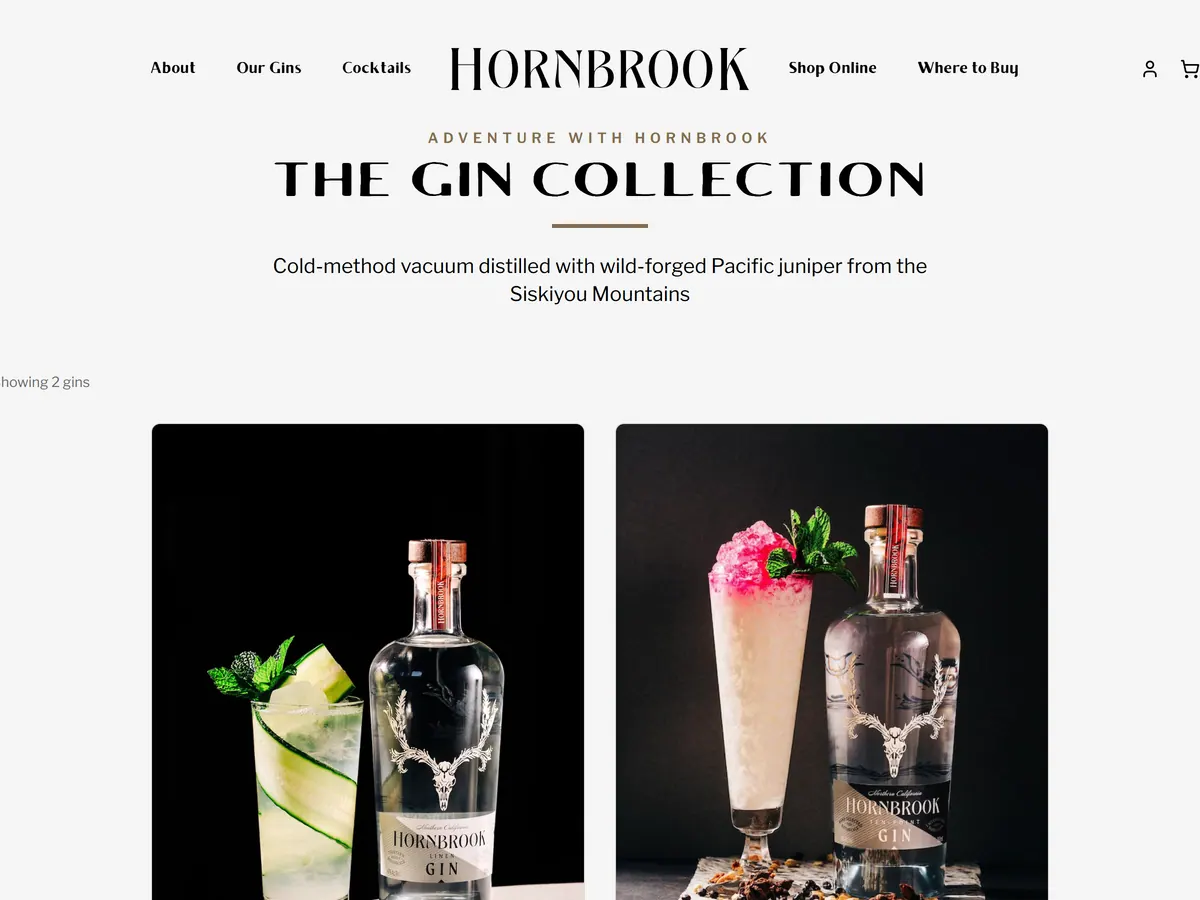
Fig. 04Hornbrook Gin’s online shop, one of the brand stores running on Pour Path
Where it started
A new spirits retailer with no audience, selling a product with extra rules: age checks, adult-signature delivery, and ad platforms that restrict alcohol.
What we did
Ticketed whiskey dinners with partner distilleries: event pages, checkout, QR tickets and check-in at the door.
Partnered with whiskey creators on social media, with a tracked checkout code for their audiences.
Search groundwork: product and FAQ structured data, a sitemap, and an age gate that search engines can still read past.
Newsletter and back-in-stock sign-ups flowing into Klaviyo, and branded emails for each store.
Purchase events sent to Meta from the server, so ad reporting doesn’t depend on the shopper’s browser.
One platform, several brands
Terranova Spirits and Hornbrook Gin run their online shops on Pour Path, and a private members’ club runs its wine cellar on it.
Each brand keeps its own look. Orders, payments, shipping and the books run on one system.
$12.4K
in ticket sales from two whiskey dinners, after refunds and test tickets
Dinners in August 2025 and February 2026, each hosted with a partner distillery.
receipt
SOURCE · Pour Path Events ticketing records
METHOD · Ticket payments for the August 2025 and February 2026 dinners, less the refunds paid back through the card processor, with our own two $1 checkout-test tickets left out. Also left out: one $150 ticket marked refunded on the ticket site although no money went back, so the figure errs low. Rounded.
in store payments kept after refunds and chargebacks, across every store on Pour Path, its own included, June 2025 to September 2026
Sales tax and shipping included. The total includes the private club’s members-only wine sale.
Net of a $4,018 disputed payment the processor has already taken back.
receipt
SOURCE · Card-processor payment, refund and dispute records for the stores on Pour Path, read with read-only access
METHOD · From the card processor’s own records: 232 completed store payments ($68.1K gross), less $5.4K refunded and $4.2K taken back in chargebacks (one lost, and one $4,018 dispute whose funds the processor has already withdrawn). Six small checkout-test charges from June and July 2025 are in the count; after their refunds they come to under $40. Sales tax and shipping included. Rounded.
VERIFIED · 2026-09
CLASS · platform account
NOTE · Net of a $4,018 disputed payment the processor has already taken back.
from one members-only wine sale for a private club in July 2026, after refunds, sales tax included
The club runs its wine-cellar store on Pour Path. This sale is part of the store-payments total, not in addition to it.
receipt
SOURCE · Order and refund records for a private club’s store on Pour Path
METHOD · The club store’s paid July 2026 orders with sales tax, less $2.2K refunded in August against those orders. The one disputed order ($4,018) is left out. Rounded.
Rivergreen: a store locator built from the distributor’s own data.
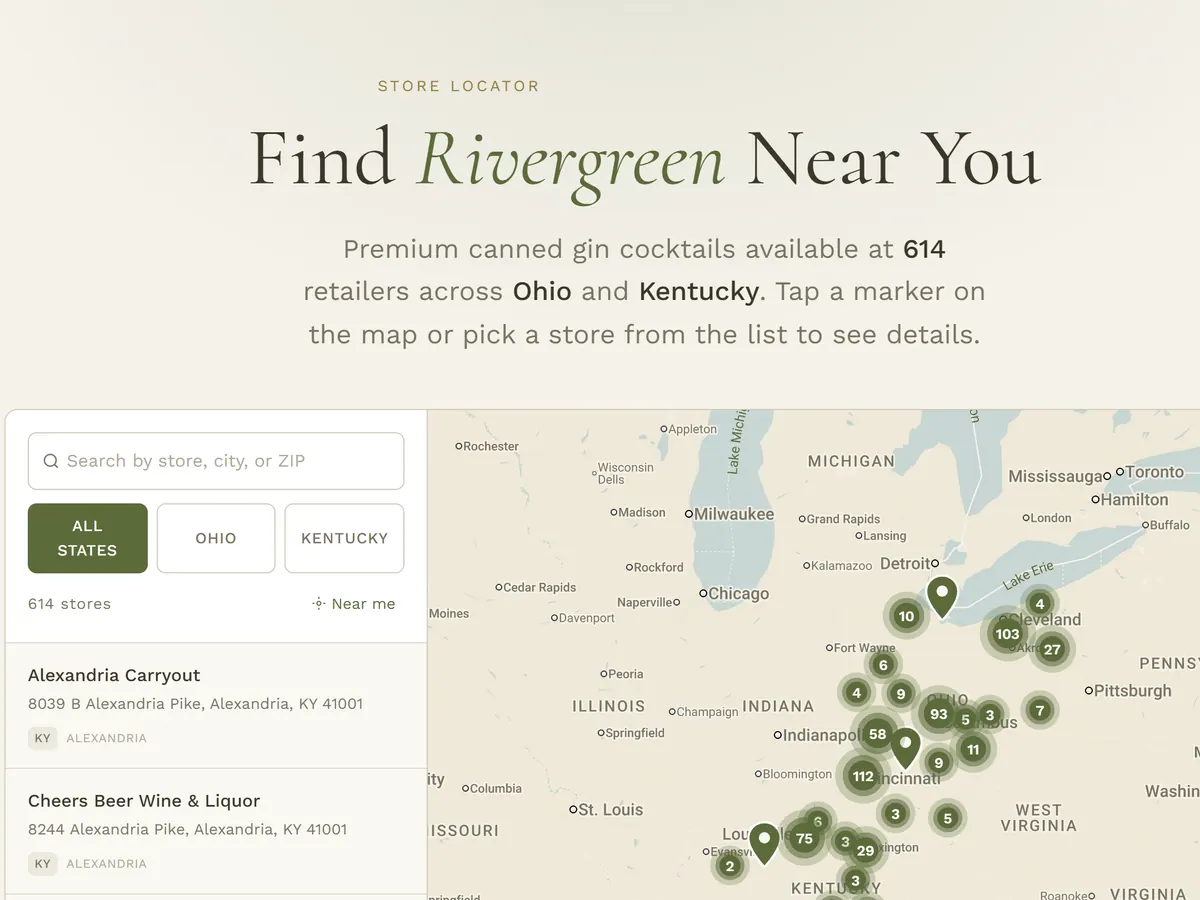
Rivergreen makes canned gin cocktails in Louisville, Kentucky. The question every shopper asks a drinks brand is where to buy it nearby, and the answer was sitting in the distributor’s sales report.
614
retail locations in a store locator generated from distributor data
Geocoded, rendered into per-state SEO pages with structured data, and regenerated from the same dataset.
receipt
SOURCE · Rivergreen Cocktails site repository (store-locator build pipeline)
METHOD · Geocoded retail accounts rendered by the build scripts.
Fig. 05The where-to-buy locator on the Rivergreen site
Where they started
The distributor’s report listed every account on its books, including many with no sales of the product this year or last. Put that on a map and shoppers drive to stores that don’t carry it.
What we did
Screened the distributor’s account list down to stores that sold the product this year or last.
Geocoded every store and rendered a page per state, with structured data search engines can read.
Built it to regenerate from the same report, so the locator keeps up as distribution grows.
Per-cocktail pages with product structured data and share cards.
American Engineering: a site rebuilt around what its clients search for.
A California land-surveying, civil-engineering and stormwater firm, certified as a disabled-veteran business, that works for public agencies and developers. The old site was a handful of general pages and said little a search engine could match to a buyer’s question.
10 → 47
indexable pages after a search-first rebuild, each with structured data, every old URL redirected
receipt
SOURCE · Site repository for a civil-engineering firm (first commit vs the published sitemap)
METHOD · HTML pages in the first commit compared with the URLs in the published sitemap.
Fig. 06The American Engineering homepage after the rebuild
Where they started
A strong firm with a thin site. Public-agency buyers search for specific services and regulations, and a few general pages gave search engines very little to match.
What we did
A page for every service, written around the questions clients actually search.
Long-form articles on the regulatory questions the firm’s clients face, such as stormwater compliance.
Project pages, structured data on every page, and a share card for each.
Every old URL redirected, so nothing the old site had earned was lost.
An llms.txt file, so answer engines describe the firm correctly.
A contact form that sends leads straight to the team.
Police departments, correctional facilities, a police academy, plus school and senior meal stores. ZIP-code routing sends out-of-area shoppers to frozen meals shipped through Craveble.
A Shopify storefront with Klaviyo email and SMS, reviews, subscriptions and wholesale ordering, plus a campaign landing page with its own offer code, so sales trace back to the campaign that drove them.
Launched in October 2021 and covered by the Sacramento Business Journal, the Sacramento Bee, KFBK and Food Gal. Ships restaurant meals to Arizona, California, Idaho, Nevada, Oregon, Utah and Washington, and runs branded online stores for partner food brands.
When we rebuilt synaptech.io in September 2026, the launch left a trail of old addresses answering with errors. We mapped every one, moved the old blog into Field Notes so its links still land, and put our own pages behind the same claims check as this one: the site will not build with a banned phrase in it.
Traffic numbers come later. The new site went live in September 2026, and we don’t publish a number before it’s real.
0 of 222
old synaptech.io addresses left broken after the rebuild
At launch, 50 of the 89 known addresses from the old site answered with an error.
receipt
SOURCE · HTTP sweeps of every known old synaptech.io address on the live site, at the September 2026 launch and again on September 29, 2026
METHOD · The 222 are the 89 old addresses in the launch-day sweep, each old blog post’s /all-posts or /articles address with and without a trailing slash, and each post’s dated /blog/ address. Each was requested on synaptech.io and followed hop by hop. It passes with a working page, one redirect to a working page, or a deliberate 410 Gone for a page retired on purpose. None ended in a 404 or took more than one redirect. Links to the old blog host (blog.synaptech.io) were checked separately: all 106 reach a working page in two redirects.
page titles and descriptions too long for search results
Eleven titles and six descriptions in the first crawl of the new site. None after the fixes.
receipt
SOURCE · Crawls of every synaptech.io page, before and after the title and description fixes
METHOD · Titles over 60 characters and descriptions over 160, counted in a crawl of every page before the fixes (25 pages) and again after them (28 pages).
“We’re not someone who runs marketing campaigns. We’re invested in knowing your business.”
I’ve spent my career building software, most of it where technology meets the business it’s supposed to serve.
I was CTO of FoodJets, the Sacramento delivery app that became Raley’s delivery partner in 2017. In 2021, Apium Logistics, a company backed by the family that owns Raley’s, bought its grocery-delivery business. I later co-founded Craveble with FoodJets’ founder, Darren McAdams. Pour Path is ours too.
So when I say every dollar of spend has to show up in the ledger, it’s because I’ve watched our own. Most marketing I’m asked to look at fails for a boring reason: the people running it know the ad platform, not the business.
We connect to your ad, analytics, store and CRM accounts read-only, trace where the money goes, and hand you the leaks in writing. It’s free for live products. After that, any work is quoted as a fixed scope before you commit.