The number
4 brand storefronts on one multi-tenant backend, plus the flagship store

Logistics · 3PL integration
3PL integration is the work of making three systems tell one story: the store that took the order, the warehouse that packs it and the carrier that moves it. We build those connections for our own brands and for clients. Our founder built the hub side for a cross-border logistics company: sorting machines, containers and carrier manifests kept in step.
30 minutes. A written gap map. No pitch unless you ask for one.
01 · What goes wrong
What brands and warehouse operators tell us about their integrations. Each one is a person doing a machine’s job.
The store says shipped, the warehouse says packed and the carrier has no record. Finding out which is right is someone’s afternoon.
A person downloads a file from one system and uploads it to another, and one missed run is a day of orders that never got packed.
The truck leaves before the manifest is confirmed, and carriers penalize parcels they were not told about.
A test order became a real shipment, or a sync overwrote live inventory, because nothing stood between the code and the other system.
Piece counts and sort codes are typed from the machine’s screen, and one slip follows the container down the line.
02 · What we build
Built to the 3PL, the warehouse system and the carriers you already run on. The gap map scopes which connections your operation needs.
01Orders
Orders go to the 3PL or warehouse system as they are paid, and pick, pack and ship confirmations come back by webhook. Nobody exports a file.
02Inventory
The warehouse holds the count and the store reads from it, so what the store sells is what the shelf holds.
03Carriers
Labels, tracking events and shipping cost through a carrier’s own API or a shipping platform, written back to the order. Voided labels get caught, not found at month end.
04Manifests
Parcels are transmitted, the carrier confirms a manifest and the manifest document comes back, paced at peak volume so the carrier’s API does not time out.
05Sorters
Container numbers, piece counts and sort codes arrive from automated sorters by webhook, in both directions, so the system and the floor agree without retyping.
06Containers
Pallets and pallet boxes get a barcode at the sort floor. One scan updates every parcel inside, at every hand-off.
07Partners
Where shipments move under a parent network’s account, API calls pick up the right parent credentials on their own, and the tracking numbers of every party resolve to one parcel.
08Safety
Any call that changes data in another system is refused until someone explicitly turns it on, and every integration runs against test orders in staging first.
09Reconcile
Store, warehouse and carrier are compared, and the differences are listed for a person to resolve: an order with no shipment, a shipment with no order.
FedEx and ShipStation are what our own brands ship through today. For you, we integrate the 3PL, the warehouse system and the carriers you already run on.
03 · Proof you can check
The commerce backend behind our own brands, where every figure opens its receipt, and the hub integrations our founder built for a cross-border logistics company we don’t name.
4 brand storefronts on one multi-tenant backend, plus the flagship store
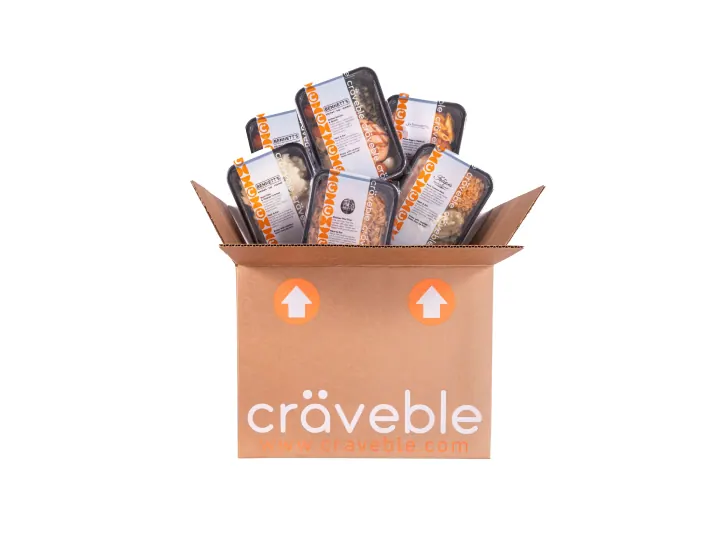
Food fulfillment (3PL) · Craveble
When Craveble opened a fulfillment service for other food brands, we shipped its SEO-structured lead-generation site with leads routed to both founders. Its Amazon FBA prep page began as a scaffold in an AI app builder before our engineers took it to Cloud Run.

Beverage alcohol commerce · Pour Path
Multi-tenant storefronts on one backend, with Square payments, ShipStation and FedEx logistics, Klaviyo and SendGrid email, and double-entry books that reconcile stores, payouts and bank statements to the cent. An AI data API answers questions about any order through a Postgres role that physically cannot write.
04 · How it starts
Each step lands on the one before it. You see every integration in staging before it touches a live order.
Every line of code we ship runs on one rule: AI drafts, senior engineers decide. How we build →
Bring your store, your 3PL or warehouse system and your carriers. We walk through how an order moves today and hand you a written gap map of the connections: what exists, what is done by hand and what disagrees.
Out a written gap map, yours to keep
If there is a fit, you get a written plan: what we keep, what we build, and why, with the scope, a timeline and an estimate. If there isn’t a fit, we say so.
Out written plan + estimate
Every integration starts read-only: orders, inventory and shipments flowing into one place and compared, with nothing written back.
Out one view of three systems
Order pushes, label requests and inventory updates are switched on one by one, each after its tests pass in staging.
Out integrations under test
Carrier manifests, containers and sorter hand-offs, so what the truck carries is what the carrier was told.
Out manifest confirmed before departure
05 · Straight answers
Whichever your operation runs on: a 3PL’s order feed, a warehouse management system, a shipping platform or a carrier’s direct API, including a vendor API from another decade. Our own brands ship through FedEx and ShipStation on rails we built.
Both. A brand needs its store and its 3PL to agree. A 3PL needs every client’s store connected, plus its own floor: containers, sorters and carrier manifests.
One of our case studies includes a fulfillment business that stores and ships for other food brands. It is linked on this page.
An integration that can change data in another system, such as creating a shipment or adjusting inventory, has those calls refused until someone explicitly switches them on. Reading comes first, writing is enabled one call at a time, and a test order cannot become a real shipment by accident.
Usually we connect. If you already run a warehouse or transportation management system, we integrate with it. If the off-the-shelf ones don’t fit how you operate, we build the parts that are missing, and the logistics page describes those parts module by module.
It depends on how many systems have to agree and how good their APIs are, so we don’t quote before the review. After it, you get a written plan with the scope, a timeline and an estimate.
06 · The front door
Bring your store, your 3PL or warehouse system and your carriers. Leave with a written gap map of the integrations, before you spend a dollar. If we’re not the right team to close the gaps, the map is still yours.
30 minutes. A written gap map. No pitch unless you ask for one.
info@synaptech.io Send us a message Pleasanton, CA